
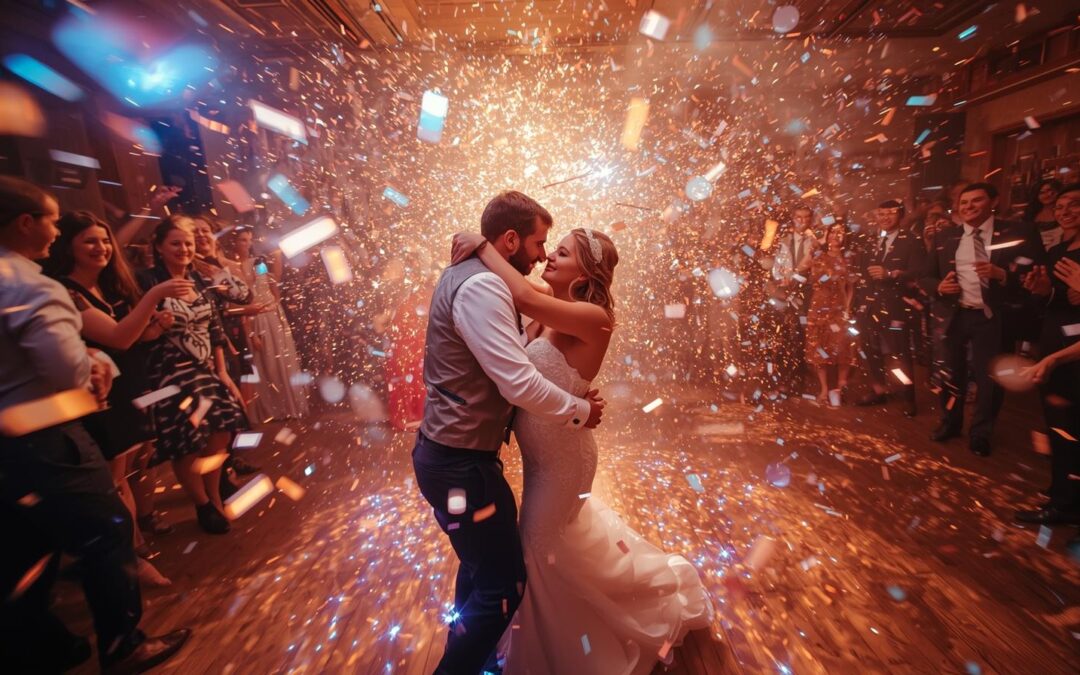
An insider guide to how DJ iSizzle curates playlists in real time to keep every age group dancing.
Weddings are magical for many reasons: two people in love, friends and family reconnecting, unforgettable speeches, great food, and the quiet little moments that become lifelong memories. However, if we’re being honest, there’s one part of the night that guests often talk about long after the last sparkler fades into the sky—the dance floor.
For me, DJ iSizzle, the dance floor is where the heart of the celebration beats the loudest. It’s where grandparents groove to Motown classics, flower girls twirl to Disney songs, uncles confidently break out questionable dance moves from the seventies, and everyone in between finds a song that makes their soul light up.
A great wedding DJ doesn’t simply “play music.” Instead, a great wedding DJ understands people, energy, flow, timing, emotion, and, above all, the vibe.
That’s what this insider guide is all about. I’m breaking down how I read the room, curate a live playlist, adjust to changing energy, and keep each dance floor moving—regardless of the age group, venue, or couple’s musical style.
Welcome to Wedding Dance Floor Magic, where I break down the art and science behind keeping the entire room dancing.
1. The Dance Floor Starts Long Before the Dancing
You might think the dance floor magic begins when the lights dim and the reception playlist starts. In reality, the foundation for a great party begins hours—and sometimes weeks—before guests even arrive.
A great DJ never shows up and simply “wings it.” Instead, I start with a detailed Music Outline created with the couple. It’s more than a checklist; it becomes a roadmap for the celebration.
I ask questions like:
- “What songs make you instantly think of your relationship?”
- “What songs should I never play?”
- “What’s your crowd like—hype, chill, line-dance lovers, EDM fans, country fans, or a mix?”
- “Are you looking for a club vibe, nostalgic vibe, family-friendly vibe, or something completely different?”
- “What do you want the last song to feel like?”
Understanding the couple’s musical DNA helps me shape the emotional journey of the night while honoring their story. At the same time, it allows me to consider the crowd’s ages, energy levels, and musical tastes.
Then comes the read.
Before the dancing even starts, I’m already in “scout mode.”
Reading the Room Before the Dance Floor Opens
During cocktail hour, I watch for clues:
- Who’s nodding their head to Motown?
- Who perks up when a ’90s hip-hop track comes on?
- Who’s vibing to the softer indie music?
- Which tables seem ready to be the first on the dance floor?
- Which groups might need a warmer introduction before they feel comfortable enough to party?
Dinner provides another opportunity to study the crowd. During the toasts, reactions reveal a lot about a group’s personality. Are guests loud and interactive? Calm and sentimental? Quick to laugh? Ready to scream-sing along later?
The dance floor doesn’t begin with the first beat drop.
It begins the moment guests walk through the door—and I’m already reading them.
2. Energy Mapping: The Secret Tool Most DJs Don’t Use
Every crowd has a natural energy flow. Ignoring that flow can make it harder to keep people engaged. My job, therefore, is to tap into the energy that already exists rather than force my own.
I call this energy mapping.
Imagine the night as a wave. It rises, falls, breathes, and builds again. Too many high-energy songs in a row can wear people out. On the other hand, too many slower songs can cause the room to lose momentum.
The goal is to gently guide the room forward while keeping the celebration feeling natural.
Here’s how I build that wave.
Phase 1 — The First Three Songs: Setting the Tone
The first song after the special dances is one of the most important moments of the reception. It can help determine how comfortable guests feel about stepping onto the dance floor.
I look for a track that:
- Is widely recognizable
- Appeals to multiple generations
- Has a strong, inviting beat
- Isn’t too intense for the beginning of the party
Think Earth, Wind & Fire, Whitney Houston, Bruno Mars, or a remix that blends nostalgia with a modern beat.
From there, song two keeps the energy moving with something fun, timeless, or rhythmically addictive.
Then comes song three—the hook.
That’s when I start looking closely at the edges of the room. When heads begin bobbing and toes start tapping, I know I’m reaching the hesitant dancers.
Phase 2 — The Power Run
Once the first groups hit the floor, I move into what I call the power run. This is typically a sequence of five to ten songs designed to maintain momentum.
These tracks can:
- Span multiple genres
- Cover different decades
- Create smooth and surprising transitions
- Include at least one memorable sing-along
During this stretch, transitions become especially important. A smooth flow keeps people engaged because the music feels continuous rather than disconnected.
Phase 3 — The Pulse Shift
Eventually, every crowd needs a change of pace.
When I notice guests sweating, laughing, breathing heavily, or stepping away for water, I don’t necessarily lower the energy. Instead, I shift the pulse.
For example:
- Hip-hop → funk or disco
- ’90s pop → Y2K crowd-pleasers
- Line dances → Latin beats
- EDM → feel-good sing-alongs
As a result, the crowd gets a fresh musical direction without feeling like the party has stopped.
Phase 4 — The Reset
Toward the final third of the night, I may introduce a soft reset. That doesn’t necessarily mean playing a slow song. Instead, I might choose something mid-tempo and groovy that gives everyone a chance to catch their breath.
Then, when the next high-energy push arrives, it feels even more impactful.
Phase 5 — The Finale
Finally, the last songs become the emotional exclamation point.
I look for music that brings people together—something anthemic, memorable, and meaningful. The right ending can make people hug, sing, sway, dance, and soak in the final moments of the celebration.
3. Reading the Room in Real Time
Here’s the truth: no pre-made playlist can completely replace a live, responsive DJ.
Reading a room is both an art and a science. It combines intuition with observation, experience with timing, and preparation with the ability to adapt.
Throughout the reception, I watch for clues:
- Shoes coming off? It might be time for a dance-floor banger.
- Older guests drifting out? I may shift toward another generation or musical style.
- Kids gathering? Disney favorites or trending songs might bring them in.
- Someone screams, “That’s my song!”? I may explore more music from that era or genre.
- People drifting toward the bar? It could be time for a change in direction.
- Guests filming on their phones? They’re probably locked into the moment.
I also keep pocket tracks—songs that tend to work across a wide range of crowds. These become useful tools when I need to redirect the room quickly.
If the dance floor starts drifting, the right transition can change the energy almost immediately. Sometimes that means a throwback. Other times, it’s a powerful drop, familiar vocal, or unexpected favorite that sparks nostalgia.
Ultimately, crowd reading isn’t luck. It comes from years of watching people react, recognizing patterns, trusting instincts, and staying one step ahead of the room.
4. Keeping Every Age Group Dancing Together
This is where dance floor magic really shines.
A wedding can bring together one of the most diverse audiences a DJ will ever work with:
- Children
- Teenagers
- People in their 20s
- Guests in their 30s, 40s, and 50s
- Parents
- Grandparents
Naturally, everyone wants to hear something they recognize. More importantly, they want something they can enjoy together.
The trick isn’t necessarily playing for one age group at a time.
The goal is finding music that connects multiple generations.
Use Songs With Cross-Generational Recognition
Songs such as “September,” “Shout,” “I Wanna Dance With Somebody,” “Yeah!,” “Dancing Queen,” “24K Magic,” and “Super Freak” can connect with different generations simultaneously.
Blend New With Old
A remix or modern rework of a classic can give younger guests a fresh way into an older song. Likewise, familiar throwbacks can give older guests an opportunity to connect with something younger generations already enjoy.
Use Strategic Clustering
Rather than staying in one genre for too long, I may group two or three songs from a particular decade or style before pivoting.
That approach gives each group a moment to feel represented without leaving everyone else stuck in a musical segment that doesn’t connect with them.
Create Call-and-Response Moments
Songs that encourage everyone to sing together can bypass age entirely.
Examples include:
- “Sweet Caroline”
- “Mr. Brightside”
- “I Want It That Way”
- “High Hopes”
- “Cupid Shuffle”
- “We Found Love”
When everyone knows the words, the room can suddenly feel like one giant group.
Togetherness is the real magic.
5. The Power of Surprise
Surprise is another powerful tool in a wedding DJ’s arsenal.
When I play a song nobody expects—but everyone loves—the reaction can be incredible.
An unexpected choice might be:
- A forgotten 2000s pop anthem
- A deep ’90s hip-hop cut
- A mashup connecting two decades
- A cultural favorite connected to the couple’s heritage
- A trending TikTok dance
- A rock anthem played at exactly the right moment
However, surprise works best when it still makes sense for the room.
That unexpected song can jolt the energy upward, create a memorable moment, and give guests something to talk about after the wedding.
6. The Anti-Playlist Philosophy
Some DJs prefer rigid playlists. I prefer structured spontaneity.
There is a plan. I know the couple’s must-plays, understand their musical preferences, and respect the songs they don’t want to hear. Beyond those guidelines, however, I leave room to respond to the room.
My music library gives me the flexibility to improvise based on:
- The crowd’s reaction
- The size of the dance floor
- The current energy
- Who’s moving and who isn’t
- Guest requests that fit the couple’s guidelines
- What complements the couple’s overall vibe
I don’t play every request.
I play the right requests.
Ultimately, a wedding shouldn’t feel like a generic club night or a Spotify playlist. Instead, it should feel personal to the couple while still giving their guests opportunities to connect.
7. The Transition Trick: Creating Seamless Flow
Transitions are where much of the magic happens.
Anyone can play songs. Not everyone can make those songs feel like they belong together.
A smooth transition turns individual tracks into one continuous experience. Consequently, guests stay immersed in the moment instead of noticing every change between songs.
Depending on the situation, I use techniques such as:
- Beatmatching
- Harmonic mixing
- Quick cuts
- Loops
- Wordplay transitions
- Mashups
- Custom edits
The goal isn’t to show off the transition. It’s to make the music feel natural.
When the transition works, guests simply keep dancing.
8. Navigating Tricky Wedding Moments
Every wedding has moments that require flexibility and finesse. Fortunately, preparation gives me a foundation to adapt when something unexpected happens.
When the Crowd Is Shy
I may begin with nostalgia, family-friendly favorites, recognizable hits, or line dances to make the dance floor feel less intimidating.
When Energy Drops Suddenly
A quick genre change or rhythm-heavy track can help redirect the room.
When the Bar Steals the Crowd
Sometimes, guests simply need the right reason to come back. A familiar favorite from an artist like Rihanna or Usher can help bring the energy back toward the dance floor.
When Requests Conflict
The couple’s Music Outline comes first. Guest requests can be incorporated when they fit the couple’s preferences and the direction of the celebration.
When the Couple Wants a Specific Vibe
I build around their choices while still reading the room. That balance allows the wedding to feel personal without becoming predictable.
When the Crowd Needs a Generational Shift
A bridge song can connect one audience to another. From there, I can gradually move toward the couple’s preferred style without creating a noticeable break in the party.
Most importantly, a professional DJ adapts.
9. Building an Unforgettable Finale
The final 30 minutes can be some of the most emotional moments of the night.
At this point, the couple often wants their favorite people together for one last shared memory.
My finales typically follow a three-part structure.
1. Nostalgic Sing-Along
I may start with a song everyone knows, often from the ’80s, ’90s, or 2000s. The goal is to bring different generations together.
2. High-Energy Peak
Next comes something joyful and danceable that lifts the room into full celebration mode.
3. Emotional Send-Off
Finally, I look for something meaningful, romantic, or iconic to the couple.
Sometimes it’s a slow song. Other times, it’s an anthem. In some cases, it might even be their first dance song in a different form.
The finale is the punctuation mark at the end of the story.
It needs to hit the heart—not just the ears.
10. The Real Magic: It’s Not Just the Songs
People often ask me:
“What’s your secret?”
The answer is simple:
I Play to the People, Not the Playlist.
Music is emotional.
Dancing is emotional.
And weddings are deeply emotional.
The dance floor is where all those threads meet: family, love, nostalgia, friendship, joy, chaos, and celebration.
A great wedding DJ is part conductor, part storyteller, and part energy artist. Through preparation, intuition, and timing, we help shape the night around the people in the room.
The magic isn’t only in the songs I choose. It’s also in why I choose them, when I play them, and how they make people feel.
After all, wedding guests rarely remember an entire track list.
They remember moments.
- Mom dancing with her son to her favorite old-school jam
- Grandma smiling when she hears the song from her prom
- The best man shouting lyrics from his childhood
- The couple kissing as confetti falls
- The floor shaking as 150 people dance in unison
That’s the magic.
That’s why I do what I do.
Final Thoughts
Curating the perfect wedding vibe isn’t simply about hitting play. Instead, it’s about reading people, understanding rhythm and emotion, and creating a living soundtrack that evolves with the room.
The goal remains the same:
Make the night unforgettable and the dance floor electric.
Create moments they’ll talk about for years to come.
That’s what I do and that’s the heart of DJ iSizzle.
And that’s the magic of a truly great wedding DJ.