
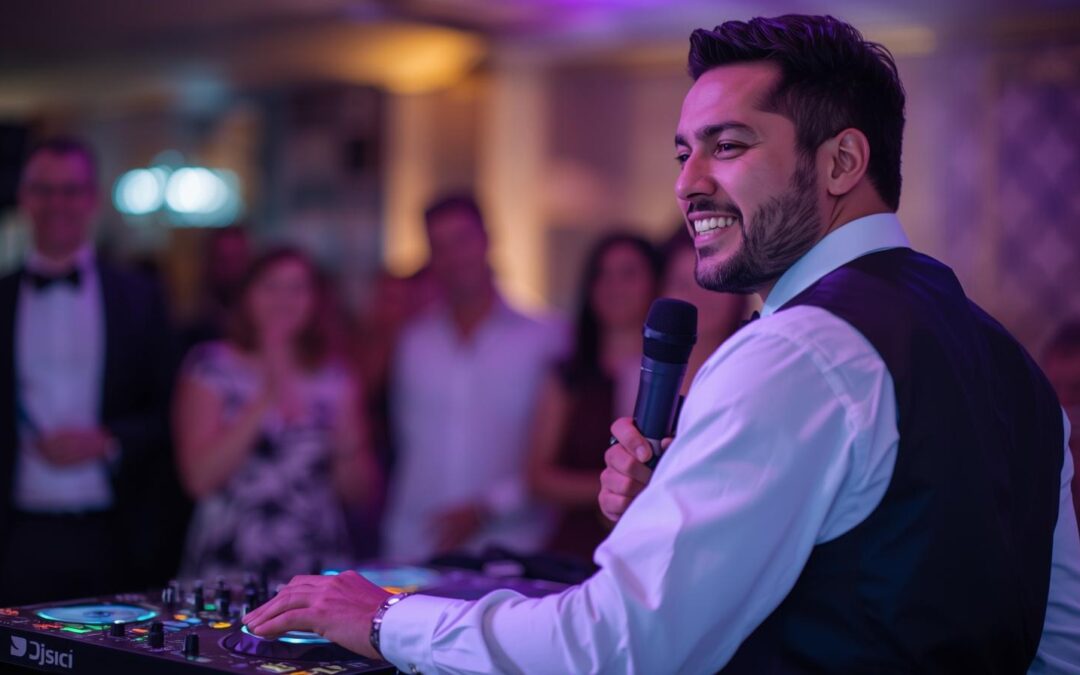
When planning a wedding, one of the most overlooked but crucial roles is that of the DJ and Master of Ceremonies (MC). While guests often focus on the music, the energy on the dance floor, or the visual beauty of the venue, the DJ + MC is quietly orchestrating the event from behind the scenes. The job is not merely spinning tracks but also guiding the night with carefully timed announcements, smooth transitions, and a deep understanding of the flow. A skilled MC keeps the event running seamlessly, often without guests realizing the intricate work happening in the background. In this article, we’ll dive deep into the MC role, explore how announcements are crafted, and explain the subtle techniques DJs use to maintain perfect timing and flow.
Understanding the MC Role
The term “MC” stands for Master of Ceremonies, and at weddings and other events, this role is far more than just talking into a microphone. An MC is essentially the glue that holds the event together. They act as a bridge between the schedule, the guests, and the entertainment, ensuring that the timeline runs smoothly. While a wedding planner or coordinator may organize the logistical side of the day, the MC interprets that plan in real-time, adapting to unexpected changes without disrupting the flow.
The MC’s responsibilities include:
- Announcing Key Moments
The MC introduces important parts of the evening, such as the grand entrance, first dances, toasts, cake cutting, and bouquet toss. These announcements need to feel natural and exciting, capturing the attention of the audience without drawing undue focus away from the moment itself. - Maintaining Event Energy
A skilled MC reads the room, knowing when to hype the crowd, create anticipation, or gently guide attention back to the timeline. They balance energy levels to ensure guests remain engaged from the cocktail hour through the last dance. - Coordinating with Vendors and Staff
Behind the scenes, the MC communicates with caterers, photographers, videographers, and venue staff to make sure transitions occur without friction. For instance, the MC might time the announcement for a toast with when the photographer is ready to capture reactions. - Handling Unplanned Moments
Weddings rarely go perfectly according to plan. A strong MC keeps the show running smoothly, whether it’s adjusting timing for delayed guests, rearranging the order of announcements, or tactfully managing unexpected interruptions.
Essentially, the MC’s role is to orchestrate the invisible flow of the event, allowing guests to enjoy the celebration while keeping every scheduled moment on track.
Crafting Seamless Announcements
Effective announcements are more than simply reading from a script. They are carefully constructed to enhance the event while feeling spontaneous and engaging. DJs and MCs spend time preparing their announcements to fit the personalities of the couple and the tone of the wedding.
1. Know the Audience
Understanding the guests is key. The MC tailors their tone, language, and style to the crowd. For a formal wedding, announcements may be elegant and understated, while a casual, upbeat wedding may feature playful humor and high energy. Reading the room is vital — a joke or enthusiastic introduction can energize a group of younger guests but may feel out of place for a more mature audience.
2. Timing Is Everything
Announcing a moment at precisely the right time is a skill that requires practice and intuition. For example:
- Grand Entrance: Announcing the bridal party and newlyweds requires perfect coordination with lighting, music, and the photographer. A well-timed entrance builds anticipation and maximizes excitement.
- Toasts: The MC ensures that toasts happen when all guests are seated, drinks are ready, and cameras are in place. Interrupting a toast or beginning it too early can break the momentum.
- Dinner Announcements: Guests often arrive at the table at different times, so announcing when food is served, or directing them to buffet stations, must be smooth and unobtrusive.
An MC may rehearse the timeline beforehand but also remains flexible to account for delays or changes, using subtle cues to adjust without drawing attention.
3. Word Choice and Delivery
The language used in announcements matters. Words should be clear, concise, and positive. The MC often employs transitional phrases that connect moments naturally:
- “As we gather for the first dance, let’s welcome [couple’s names] to the floor.”
- “Please raise your glasses as we toast the happy couple.”
- “The cake is ready to be cut, and our photographer will capture every sweet moment.”
Tone, pacing, and projection are also critical. A calm, confident delivery makes announcements feel effortless, while awkward pauses or rushing can disrupt the event flow. Experienced DJs often practice mic techniques to control volume, tone, and clarity.
The Art of Reading the Room
A DJ + MC must be attuned to the energy of the guests. Reading the room involves:
- Observing Reactions: Are guests laughing, chatting, or distracted? The MC may adjust announcements or music to re-engage attention.
- Adapting to Pace: Some weddings may move quickly, while others may require a slower pace to accommodate speeches or delayed food service.
- Nonverbal Cues: Guests’ body language informs the MC when to speed up transitions or extend moments. A well-timed pause can create suspense before a major announcement, while a quick segue can maintain momentum if energy dips.
This skill comes with experience, as even small adjustments can significantly impact the overall flow of the evening.
Behind the Scenes: Coordination and Timing
While guests enjoy the event on the surface, the MC is working meticulously behind the scenes. This often involves invisible communication and multitasking:
- Cueing Music: Coordinating with the DJ aspect to ensure songs start and stop at the right moment, especially for dances, entrances, or processional music.
- Liaising with Vendors: Ensuring the photographer, videographer, caterer, and other vendors are aligned with the timeline.
- Checking the Room: Monitoring guests’ locations, table arrangements, and readiness for announcements.
- Adapting on the Fly: If a speech runs long, or guests arrive late, the MC adjusts the sequence subtly so that nothing feels rushed or disorganized.
These tasks require preparation, focus, and experience, but when done correctly, the audience remains unaware of the work behind the mic.
Examples of MC Announcements
Here are some common examples of announcements made by DJs + MCs, showing the balance between clarity and entertainment:
- Grand Entrance
“Ladies and gentlemen, it’s time to welcome the newlyweds! Please give a big round of applause for Mr. and Mrs. [Last Name]!” - First Dance
“The moment you’ve all been waiting for — the first dance of our happy couple. Let’s give them our attention as they share this special moment.” - Toasts / Speeches
“We’d like to invite [Name] to the mic for a few words about our beautiful couple. Let’s show our appreciation with a round of applause!” - Dinner Service
“Dinner is served! Please enjoy the delicious meal prepared by [caterer]. After dinner, we’ll have more special moments to celebrate.” - Cake Cutting
“It’s time for a sweet tradition — the cutting of the cake! Let’s gather around and capture this memorable moment.” - Bouquet / Garter Toss
“Single ladies, gather on the dance floor! It’s time for the bouquet toss — may the next bride-to-be catch it!” - Last Dance
“As our night comes to a close, let’s share one final dance with the newlyweds. Thank you all for celebrating this special day!”
DJ + MC: Dual Responsibilities
Many modern wedding DJs also serve as the MC, combining musical expertise with event guidance. This dual role allows for perfect synchronization between music and announcements. Consider:
- Music Transitions: The DJ can fade in or out songs to match the announcement’s timing, ensuring a seamless experience.
- Pacing the Event: DJs with MC skills know when to extend or shorten songs based on announcements or delays.
- Crowd Engagement: Music and announcements work together to maintain energy. A DJ + MC can read the crowd and cue songs that match the room’s vibe, punctuating announcements with musical cues.
This integration reduces errors and ensures that the timeline flows naturally.
Planning and Preparation
The seamless execution of announcements begins long before the event. Professional DJs + MCs follow a structured planning process:
- Consultation with the Couple
Discussing personalities, preferences, and specific requests ensures that announcements reflect the couple’s style. - Creating a Timeline
Drafting a minute-by-minute or hour-by-hour outline of key events, songs, and announcements. - Prewriting Announcements
While flexibility is crucial, having prewritten announcements saves time and reduces stress during the event. - Rehearsal and Coordination
Coordinating with other vendors, testing audio equipment, and ensuring all cues are understood.
Preparation allows the MC to focus on delivering announcements with confidence, leaving room for improvisation if needed.
Tips for Couples Hiring a DJ + MC
- Ask About MC Experience: Some DJs focus mainly on music, while others excel in MC duties. Make sure your DJ can also MC if needed.
- Request Sample Announcements: Hearing examples helps assess their tone, energy, and style.
- Discuss Timeline in Detail: The more the MC knows in advance, the smoother the event. Include exact ceremony times, reception start, dinner, speeches, dances, and send-off.
- Plan for Flexibility: Even with a solid timeline, events can shift. A great MC will adjust without guests noticing.
The Invisible Work
It’s easy for guests to assume that everything is perfectly planned without realizing the MC’s effort. Some of the invisible work includes:
- Monitoring cues from the room
- Adjusting volume and microphone levels
- Watching for timing overlaps
- Managing guest flow between spaces
- Handling last-minute changes or surprises
By executing these tasks seamlessly, the MC ensures the event appears effortless and enjoyable, making the day unforgettable for everyone involved.
Conclusion
The role of the DJ + MC is essential in creating a wedding or event that feels smooth, engaging, and well-organized. Behind every seamless announcement, every perfectly timed dance, and every lively toast, there is a professional carefully orchestrating the night. The MC ensures that guests remain engaged, that the timeline is followed, and that all key moments receive the attention they deserve — all without drawing attention to themselves. This invisible work requires preparation, adaptability, intuition, and charisma.
When done well, the DJ + MC transforms an ordinary celebration into a polished, flowing event where guests can relax, have fun, and make memories — often without ever realizing just how much effort went on behind the mic. Their work is a mix of artistry, timing, and audience reading, making them one of the unsung heroes of every unforgettable wedding.