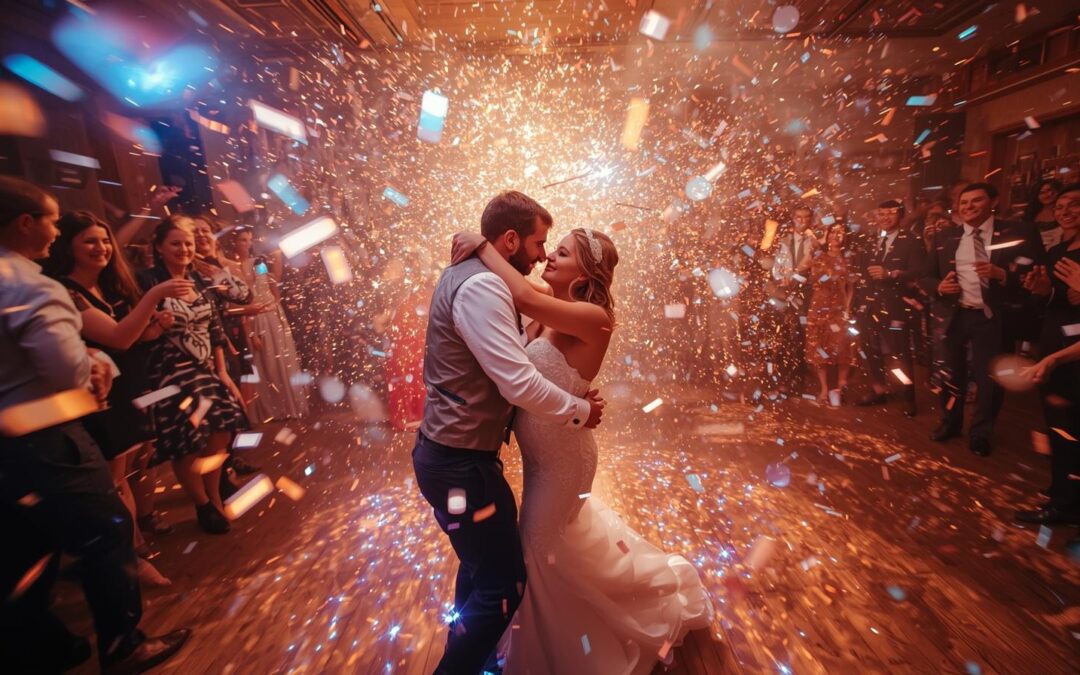
An insider guide to how DJ iSizzle curates playlists in real time to keep every age group dancing.
Weddings are magical for many reasons: two people in love, friends and family reconnecting, unforgettable speeches, great food, and the quiet little moments that become lifelong memories. However, if we’re being honest, there’s one part of the night that guests often talk about long after the last sparkler fades into the sky—the dance floor.
For me, DJ iSizzle, the dance floor is where the heart of the celebration beats the loudest. It’s where grandparents groove to Motown classics, flower girls twirl to Disney songs, uncles confidently break out questionable dance moves from the seventies, and everyone in between finds a song that makes their soul light up.
A great wedding DJ doesn’t simply “play music.” Instead, a great wedding DJ understands people, energy, flow, timing, emotion, and, above all, the vibe.
That’s what this insider guide is all about. I’m breaking down how I read the room, curate a live playlist, adjust to changing energy, and keep each dance floor moving—regardless of the age group, venue, or couple’s musical style.
Welcome to Wedding Dance Floor Magic, where I break down the art and science behind keeping the entire room dancing.
1. The Dance Floor Starts Long Before the Dancing
You might think the dance floor magic begins when the lights dim and the reception playlist starts. In reality, the foundation for a great party begins hours—and sometimes weeks—before guests even arrive.
A great DJ never shows up and simply “wings it.” Instead, I start with a detailed Music Outline created with the couple. It’s more than a checklist; it becomes a roadmap for the celebration.
I ask questions like:
“What songs make you instantly think of your relationship?”
“What songs should I never play?”
“What’s your crowd like—hype, chill, line-dance lovers, EDM fans, country fans, or a mix?”
“Are you looking for a club vibe, nostalgic vibe, family-friendly vibe, or something completely different?”
“What do you want the last song to feel like?”
Understanding the couple’s musical DNA helps me shape the emotional journey of the night while honoring their story. At the same time, it allows me to consider the crowd’s ages, energy levels, and musical tastes.
Then comes the read.
Before the dancing even starts, I’m already in “scout mode.”
Reading the Room Before the Dance Floor Opens
During cocktail hour, I watch for clues:
Who’s nodding their head to Motown?
Who perks up when a ’90s hip-hop track comes on?
Who’s vibing to the softer indie music?
Which tables seem ready to be the first on the dance floor?
Which groups might need a warmer introduction before they feel comfortable enough to party?
Dinner provides another opportunity to study the crowd. During the toasts, reactions reveal a lot about a group’s personality. Are guests loud and interactive? Calm and sentimental? Quick to laugh? Ready to scream-sing along later?
The dance floor doesn’t begin with the first beat drop.
It begins the moment guests walk through the door—and I’m already reading them.
2. Energy Mapping: The Secret Tool Most DJs Don’t Use
Every crowd has a natural energy flow. Ignoring that flow can make it harder to keep people engaged. My job, therefore, is to tap into the energy that already exists rather than force my own.
I call this energy mapping.
Imagine the night as a wave. It rises, falls, breathes, and builds again. Too many high-energy songs in a row can wear people out. On the other hand, too many slower songs can cause the room to lose momentum.
The goal is to gently guide the room forward while keeping the celebration feeling natural.
Here’s how I build that wave.
Phase 1 — The First Three Songs: Setting the Tone
The first song after the special dances is one of the most important moments of the reception. It can help determine how comfortable guests feel about stepping onto the dance floor.
I look for a track that:
Is widely recognizable
Appeals to multiple generations
Has a strong, inviting beat
Isn’t too intense for the beginning of the party
Think Earth, Wind & Fire, Whitney Houston, Bruno Mars, or a remix that blends nostalgia with a modern beat.
From there, song two keeps the energy moving with something fun, timeless, or rhythmically addictive.
Then comes song three—the hook.
That’s when I start looking closely at the edges of the room. When heads begin bobbing and toes start tapping, I know I’m reaching the hesitant dancers.
Phase 2 — The Power Run
Once the first groups hit the floor, I move into what I call the power run. This is typically a sequence of five to ten songs designed to maintain momentum.
These tracks can:
Span multiple genres
Cover different decades
Create smooth and surprising transitions
Include at least one memorable sing-along
During this stretch, transitions become especially important. A smooth flow keeps people engaged because the music feels continuous rather than disconnected.
Phase 3 — The Pulse Shift
Eventually, every crowd needs a change of pace.
When I notice guests sweating, laughing, breathing heavily, or stepping away for water, I don’t necessarily lower the energy. Instead, I shift the pulse.
For example:
Hip-hop → funk or disco
’90s pop → Y2K crowd-pleasers
Line dances → Latin beats
EDM → feel-good sing-alongs
As a result, the crowd gets a fresh musical direction without feeling like the party has stopped.
Phase 4 — The Reset
Toward the final third of the night, I may introduce a soft reset. That doesn’t necessarily mean playing a slow song. Instead, I might choose something mid-tempo and groovy that gives everyone a chance to catch their breath.
Then, when the next high-energy push arrives, it feels even more impactful.
Phase 5 — The Finale
Finally, the last songs become the emotional exclamation point.
I look for music that brings people together—something anthemic, memorable, and meaningful. The right ending can make people hug, sing, sway, dance, and soak in the final moments of the celebration.
3. Reading the Room in Real Time
Here’s the truth: no pre-made playlist can completely replace a live, responsive DJ.
Reading a room is both an art and a science. It combines intuition with observation, experience with timing, and preparation with the ability to adapt.
Throughout the reception, I watch for clues:
Shoes coming off? It might be time for a dance-floor banger.
Older guests drifting out? I may shift toward another generation or musical style.
Kids gathering? Disney favorites or trending songs might bring them in.
Someone screams, “That’s my song!”? I may explore more music from that era or genre.
People drifting toward the bar? It could be time for a change in direction.
Guests filming on their phones? They’re probably locked into the moment.
I also keep pocket tracks—songs that tend to work across a wide range of crowds. These become useful tools when I need to redirect the room quickly.
If the dance floor starts drifting, the right transition can change the energy almost immediately. Sometimes that means a throwback. Other times, it’s a powerful drop, familiar vocal, or unexpected favorite that sparks nostalgia.
Ultimately, crowd reading isn’t luck. It comes from years of watching people react, recognizing patterns, trusting instincts, and staying one step ahead of the room.
4. Keeping Every Age Group Dancing Together
This is where dance floor magic really shines.
A wedding can bring together one of the most diverse audiences a DJ will ever work with:
Children
Teenagers
People in their 20s
Guests in their 30s, 40s, and 50s
Parents
Grandparents
Naturally, everyone wants to hear something they recognize. More importantly, they want something they can enjoy together.
The trick isn’t necessarily playing for one age group at a time.
The goal is finding music that connects multiple generations.
Use Songs With Cross-Generational Recognition
Songs such as “September,” “Shout,” “I Wanna Dance With Somebody,” “Yeah!,” “Dancing Queen,” “24K Magic,” and “Super Freak” can connect with different generations simultaneously.
Blend New With Old
A remix or modern rework of a classic can give younger guests a fresh way into an older song. Likewise, familiar throwbacks can give older guests an opportunity to connect with something younger generations already enjoy.
Use Strategic Clustering
Rather than staying in one genre for too long, I may group two or three songs from a particular decade or style before pivoting.
That approach gives each group a moment to feel represented without leaving everyone else stuck in a musical segment that doesn’t connect with them.
Create Call-and-Response Moments
Songs that encourage everyone to sing together can bypass age entirely.
Examples include:
“Sweet Caroline”
“Mr. Brightside”
“I Want It That Way”
“High Hopes”
“Cupid Shuffle”
“We Found Love”
When everyone knows the words, the room can suddenly feel like one giant group.
Togetherness is the real magic.
5. The Power of Surprise
Surprise is another powerful tool in a wedding DJ’s arsenal.
When I play a song nobody expects—but everyone loves—the reaction can be incredible.
An unexpected choice might be:
A forgotten 2000s pop anthem
A deep ’90s hip-hop cut
A mashup connecting two decades
A cultural favorite connected to the couple’s heritage
A trending TikTok dance
A rock anthem played at exactly the right moment
However, surprise works best when it still makes sense for the room.
That unexpected song can jolt the energy upward, create a memorable moment, and give guests something to talk about after the wedding.
6. The Anti-Playlist Philosophy
Some DJs prefer rigid playlists. I prefer structured spontaneity.
There is a plan. I know the couple’s must-plays, understand their musical preferences, and respect the songs they don’t want to hear. Beyond those guidelines, however, I leave room to respond to the room.
My music library gives me the flexibility to improvise based on:
The crowd’s reaction
The size of the dance floor
The current energy
Who’s moving and who isn’t
Guest requests that fit the couple’s guidelines
What complements the couple’s overall vibe
I don’t play every request.
I play the right requests.
Ultimately, a wedding shouldn’t feel like a generic club night or a Spotify playlist. Instead, it should feel personal to the couple while still giving their guests opportunities to connect.
7. The Transition Trick: Creating Seamless Flow
Transitions are where much of the magic happens.
Anyone can play songs. Not everyone can make those songs feel like they belong together.
A smooth transition turns individual tracks into one continuous experience. Consequently, guests stay immersed in the moment instead of noticing every change between songs.
Depending on the situation, I use techniques such as:
Beatmatching
Harmonic mixing
Quick cuts
Loops
Wordplay transitions
Mashups
Custom edits
The goal isn’t to show off the transition. It’s to make the music feel natural.
When the transition works, guests simply keep dancing.
8. Navigating Tricky Wedding Moments
Every wedding has moments that require flexibility and finesse. Fortunately, preparation gives me a foundation to adapt when something unexpected happens.
When the Crowd Is Shy
I may begin with nostalgia, family-friendly favorites, recognizable hits, or line dances to make the dance floor feel less intimidating.
When Energy Drops Suddenly
A quick genre change or rhythm-heavy track can help redirect the room.
When the Bar Steals the Crowd
Sometimes, guests simply need the right reason to come back. A familiar favorite from an artist like Rihanna or Usher can help bring the energy back toward the dance floor.
When Requests Conflict
The couple’s Music Outline comes first. Guest requests can be incorporated when they fit the couple’s preferences and the direction of the celebration.
When the Couple Wants a Specific Vibe
I build around their choices while still reading the room. That balance allows the wedding to feel personal without becoming predictable.
When the Crowd Needs a Generational Shift
A bridge song can connect one audience to another. From there, I can gradually move toward the couple’s preferred style without creating a noticeable break in the party.
Most importantly, a professional DJ adapts.
9. Building an Unforgettable Finale
The final 30 minutes can be some of the most emotional moments of the night.
At this point, the couple often wants their favorite people together for one last shared memory.
My finales typically follow a three-part structure.
1. Nostalgic Sing-Along
I may start with a song everyone knows, often from the ’80s, ’90s, or 2000s. The goal is to bring different generations together.
2. High-Energy Peak
Next comes something joyful and danceable that lifts the room into full celebration mode.
3. Emotional Send-Off
Finally, I look for something meaningful, romantic, or iconic to the couple.
Sometimes it’s a slow song. Other times, it’s an anthem. In some cases, it might even be their first dance song in a different form.
The finale is the punctuation mark at the end of the story.
It needs to hit the heart—not just the ears.
10. The Real Magic: It’s Not Just the Songs
People often ask me:
“What’s your secret?”
The answer is simple:
I Play to the People, Not the Playlist.
Music is emotional.
Dancing is emotional.
And weddings are deeply emotional.
The dance floor is where all those threads meet: family, love, nostalgia, friendship, joy, chaos, and celebration.
A great wedding DJ is part conductor, part storyteller, and part energy artist. Through preparation, intuition, and timing, we help shape the night around the people in the room.
The magic isn’t only in the songs I choose. It’s also in why I choose them, when I play them, and how they make people feel.
After all, wedding guests rarely remember an entire track list.
They remember moments.
Mom dancing with her son to her favorite old-school jam
Grandma smiling when she hears the song from her prom
The best man shouting lyrics from his childhood
The couple kissing as confetti falls
The floor shaking as 150 people dance in unison
That’s the magic.
That’s why I do what I do.
Final Thoughts
Curating the perfect wedding vibe isn’t simply about hitting play. Instead, it’s about reading people, understanding rhythm and emotion, and creating a living soundtrack that evolves with the room.
The goal remains the same:
Make the night unforgettable and the dance floor electric.
Create moments they’ll talk about for years to come.
That’s what I do and that’s the heart of DJ iSizzle.
Known for his professionalism and a deep passion for music, he crafts unforgettable experiences through personalized playlists and seamless event coordination. Whether it’s your ceremony, reception, or the after-party, DJ iSizzle brings unmatched energy and expertise to make your wedding unforgettable.
When it comes to planning a wedding, corporate event, or private party, music is often the heartbeat of the experience. From the first note to the last dance, music sets the tone, engages your guests, and creates memories that last a lifetime. Many hosts today consider creating a DIY playlist on streaming platforms as a budget-friendly option. But while DIY playlists can seem convenient, there are significant advantages to hiring a professional DJ and MC.
In this article, we’ll break down why professional DJs aren’t just “button pushers” — they’re entertainers, crowd managers, and technicians who ensure your event flows seamlessly. We’ll explore the key differences between DIY playlists and professional services, covering sound quality, transitions, energy management, and guest happiness.
1. The Allure of DIY Playlists
Cost-Effective and Convenient
One of the biggest draws of DIY playlists is cost. Streaming platforms make it easy to select your favorite songs, organize them by mood or tempo, and hit play. You don’t have to pay for a service, equipment, or tips, which can be appealing for couples on a tight budget or hosts throwing smaller gatherings.
Personal Touch
A DIY playlist allows for complete control over song selection. You can include every personal favorite, inside joke, or sentimental track. In theory, this customization can make your event feel intimate and reflective of your personality.
Accessibility
With a laptop, tablet, or phone and a simple speaker system, anyone can run a playlist. This accessibility adds to the appeal for DIY enthusiasts who want full control without involving a professional.
2. The Hidden Challenges of DIY Playlists
While DIY playlists may appear simple and economical, the reality of live events often exposes their limitations. Let’s examine some of the most common challenges.
2.1 Timing and Flow Issues
A playlist is static. Once the music starts, it plays in a predetermined order. If a moment lasts longer than expected—like a toast, dance, or ceremony interruption—the next song may start abruptly, throwing off the flow.
Professional DJs are trained to read the room and adjust timing on the fly. They can pause, extend, or reorder songs to fit live events, ensuring transitions feel natural rather than jarring.
2.2 Poor Transitions
Transitioning from one song to another is more than just clicking “next.” Even songs with compatible tempos can feel awkward if they don’t blend smoothly. Abrupt changes can break the energy on the dance floor or interrupt emotional moments during slower segments.
Professional DJs use beatmatching, key matching, and smooth crossfading to create seamless transitions. This ensures your playlist doesn’t feel like a series of disjointed tracks but a continuous, flowing soundtrack for your event.
2.3 Limited Technical Control
Even high-quality home speakers can struggle with the acoustics of large venues. DIY setups often lack the power or clarity needed for wedding halls, outdoor spaces, or large ballrooms. Poor sound can make even the best song choices sound flat or tinny.
Professional DJs bring high-quality sound systems, including subwoofers, speakers, mixers, and microphones. They understand the nuances of room acoustics and can adjust volume levels, equalization, and speaker placement for optimal sound.
2.4 Guest Engagement Challenges
A playlist cannot engage your guests or read the room. It cannot adjust based on the crowd’s energy, encourage shy guests to dance, or know when to change gears if people seem restless.
Professional DJs act as crowd managers, selecting songs based on real-time reactions, adjusting energy levels, and creating momentum. They know when to play slow songs, upbeat hits, or crowd favorites to keep everyone engaged.
2.5 Event Coordination
Events often have multiple elements beyond dancing: speeches, dinner, ceremonies, and special moments like cake cutting or anniversary dances. A DIY playlist cannot respond in real-time to these cues. Songs may start too early, too late, or not at all.
Professional DJs double as MCs (Masters of Ceremonies). They coordinate with event planners, officiants, and hosts, ensuring that each moment receives appropriate musical accompaniment and timing.
3. Why Professional DJs Make a Difference
Now that we’ve outlined the limitations of DIY playlists, let’s explore the advantages of hiring a professional DJ and MC.
3.1 Expertise in Music Selection
Professional DJs don’t just play songs—they curate experiences. They understand how to build energy over time, transition from cocktail hour to dinner, then gradually ramp up for dancing. They know what songs work for different age groups, crowds, and event types.
A good DJ listens to your preferences and integrates your must-play songs, while also suggesting hits that fill in the gaps to maintain energy.
3.2 Real-Time Crowd Reading
A professional DJ constantly reads the room. They gauge engagement and adjust the playlist accordingly. If the dance floor empties, they may throw in a crowd favorite or switch genres. If a moment calls for intimacy, they play something slower or more sentimental.
This dynamic adjustment ensures guests remain engaged throughout the event, something a static playlist simply cannot do.
3.3 Smooth Transitions
Professional DJs ensure seamless song transitions, using techniques like beatmatching, tempo blending, and key matching. This maintains the flow of the party and keeps energy levels consistent. A DIY playlist, even with thoughtful planning, cannot replicate these subtle nuances.
3.4 High-Quality Sound and Equipment
Professional DJs bring commercial-grade equipment designed for events. This includes speakers, mixers, microphones, lighting, and sometimes video projection. They know how to balance sound so it’s not too loud for conversation or too soft for dancing.
They also have backups in case of technical difficulties, ensuring the party never stops due to equipment failure—a safety net DIY playlists lack.
3.5 MC Skills and Event Flow
An MC’s role goes far beyond announcing the next song. They manage the flow of events, introduce speeches, guide transitions, and keep energy consistent. They can energize guests, handle unexpected delays gracefully, and keep everyone informed about what’s happening next.
Without a professional MC, the event may feel disorganized or disjointed, even if the playlist itself is carefully planned.
3.6 Stress Reduction for Hosts
Hiring a professional DJ reduces the stress on hosts. You don’t have to worry about song order, transitions, or technical issues. The DJ ensures that the music and announcements happen smoothly, freeing you to enjoy the event and focus on your guests.
4. Real-Life Scenarios: DIY vs Professional DJs
Scenario 1: Wedding Reception
DIY Playlist: Guests arrive, music plays. The first dance starts but a toast interrupts, and the next song begins abruptly. Some older guests leave the dance floor early because they don’t recognize the songs, and the energy drops.
Professional DJ: The DJ pauses, extends background music, and waits for the toast to finish. They cue the first dance seamlessly, then transition into crowd favorites that keep the dance floor full. Guests of all ages feel included, and energy remains high.
Scenario 2: Corporate Event
DIY Playlist: The event begins with background music, but the playlist doesn’t match the vibe. A critical announcement overlaps with the music, making it hard to hear. Later, songs repeat or are inappropriate for certain moments.
Professional DJ/MC: The DJ manages sound levels, knows when to fade music for announcements, and selects songs that enhance the corporate vibe. They can also make live announcements or facilitate awards and games.
Scenario 3: Birthday or Family Party
DIY Playlist: Music plays, but as the crowd thins, no one knows what to play next. Guests are unsure when to start dancing or what songs are coming.
Professional DJ/MC: The DJ engages guests, builds energy gradually, and changes the playlist based on crowd reaction. The birthday honoree feels celebrated, and everyone participates.
5. The Psychology of Music and Guest Experience
Professional DJs understand not only music theory but also event psychology. Certain songs trigger nostalgia, excitement, or emotional connection. Timing and sequence matter: starting with familiar upbeat hits warms guests, while slower songs during dinner or sentimental moments encourage reflection.
Energy Management: DJs manage peaks and valleys in energy, preventing fatigue or boredom.
Inclusivity: DJs can mix genres to include all age groups, cultural backgrounds, or preferences.
Memory Creation: Professional transitions and crowd engagement enhance emotional connection, making the event memorable.
6. Cost vs. Value: Why Professionals Are Worth It
Hiring a professional DJ may seem expensive compared to a DIY playlist, but it’s an investment in peace of mind and guest experience. Consider the hidden costs of DIY:
Time spent curating playlists and organizing transitions.
Equipment rental or purchase.
Risk of poor sound quality or technical failure.
Potential awkward moments or dead air during the event.
Professional DJs mitigate these risks. Their expertise ensures better timing, higher-quality sound, and smoother event flow, which often leads to happier guests and a more memorable event. In many cases, the value far exceeds the cost difference.
7. Common Misconceptions About DJs
Misconception 1: DJs Are Just Button-Pushers
Reality: DJs are trained in mixing, timing, crowd reading, and sound engineering. They do much more than press play.
Misconception 2: Any Playlist Will Do
Reality: Music is only part of the equation. Transitions, volume, and timing are crucial. Without professional skill, even the best playlist can fall flat.
Misconception 3: MCing Can Wait
Reality: Professional MCing guides the event, keeps guests engaged, and ensures important moments aren’t missed. DIY announcements rarely match the polish or timing of an experienced MC.
8. How to Choose the Right DJ + MC
When selecting a professional DJ, consider:
Experience: Look for DJs with proven experience at weddings or events similar to yours.
Style: Ensure their musical style and MC personality match your event.
Equipment: Confirm they have high-quality, reliable gear.
Reviews/References: Ask for client testimonials or watch past event footage.
Compatibility: You should feel comfortable working with them—they’ll be the personality guiding your event.
9. Tips for a Successful DIY + DJ Hybrid
Some hosts opt for a hybrid approach: a curated playlist supplemented by a professional DJ/MC. This allows personal song choices while still benefiting from professional expertise.
Provide a “must-play” playlist to your DJ.
Let the DJ rearrange, pause, or add songs for flow.
Use professional sound equipment rather than relying solely on consumer speakers.
Keep the DJ aware of the event schedule to manage timing for speeches or toasts.
This hybrid approach can balance personalization with professional quality.
10. Conclusion: Why Professionals Make the Difference
Music is more than background noise—it’s the lifeblood of your event. While DIY playlists are tempting for their cost and convenience, they often fall short in live situations. Poor transitions, inconsistent sound, and lack of crowd management can diminish the experience for you and your guests.
Professional DJs and MCs bring technical expertise, crowd awareness, and event management skills. They create seamless transitions, maintain energy, and ensure every special moment is highlighted appropriately. In short, a professional DJ + MC transforms your playlist into an experience, giving you, your guests, and your loved ones memories that last a lifetime.
When planning your next event, consider the value of peace of mind, high-quality sound, and a stress-free timeline. A professional DJ is more than a music player—they’re the conductor of your celebration, orchestrating joy from start to finish.
Cocktail hour at a wedding often feels like a sweet pause — a time when guests mingle, sip signature drinks, and soak in the excitement before the reception kicks off. But for many couples, this transitional moment can be overlooked or under‑curated. As a wedding DJ who’s spun thousands of hours, I’m here to tell you: when done right, the cocktail hour is one of the most important parts of your celebration.
Here’s my guide — based on experience, stories, and proven strategies — for making your cocktail hour fun, musical, and perfectly in sync with the rest of your event.
1. Understand the Role of Cocktail Hour Music
1.1 Ambiance, Not a Show
First off, treat cocktail hour music as ambiance, not a performance. Its job is to support conversation, not demand center stage. According to wedding planning guides, the music should remain mellow and played at a low volume so it doesn’t overshadow guests mingling. WeddingWire+2Wedding Spot+2
If the music is too loud or intrusive, it competes with the social energy — that’s a fast way to put people off. As one DJ guide notes, you want a subtle backdrop that enhances, rather than dominates, the space. Gay Weddings Magazine
1.2 Building Anticipation
Cocktail hour is also a bridge — a sonic and emotional transition from ceremony to reception. The right music helps set the tone for the rest of the evening. According to planners, you can gently build energy over the hour, setting the stage for the main party. One Of A Kind Events
A well-crafted playlist or DJ set during cocktail hour is like the opening act: it doesn’t need to steal the spotlight, but it should hint at what’s to come.
1.3 Volume & Audio Balance
One practical technical note: volume matters. Too quiet, and the music fades into the background so much that it loses impact. Too loud, and it drowns out conversations or makes guests lean in uncomfortably. As one DJ entertainment company puts it, striking the right balance is key. Altitude DJ
A professional DJ will continuously monitor and adjust sound levels as the space fills, and as guests move around. This dynamic adjustment is part of the value of having a DJ (vs just a plug-in playlist).
2. Choose the Right Types of Music for Cocktail Hour
Here, I walk you through genres, song styles, and how to pick tracks that enhance conversation and mood.
2.1 Recommended Genres & Styles
Some genres are almost tailor-made for cocktail hour — they create warmth, sophistication, and timelessness without demanding that people stop chatting.
Jazz (instrumental, smooth): Classic, elegant, and conversation-friendly. Big band or small combo both work. Gay Weddings Magazine+1
Classical: Instrumental classical music brings a graceful, refined feel. Gay Weddings Magazine+1
Soft Pop / Acoustic: Light pop or acoustic covers give a familiar feel while keeping things gentle.
Soul / R&B (soft): Warm vocals, mellow rhythms, familiar but not overpowering.
Indie Folk / Indie Pop: Great for modern weddings — a little unexpected, but very lovely and unobtrusive.
Instrumental Covers: String quartet versions of modern songs, piano covers, or other arrangements strike a nice balance. Wedding-spot guides recommend Vitamin String Quartet covers, for example. Wedding Spot
2.2 Mixing Familiar & Fresh
One of my favorite strategies is to mix familiar crowd-pleasers with a few surprising tracks. This gives guests something they recognize — which helps them relax — while also adding moments of discovery.
My one-of-a-kind playlist advice: pick 10–15 “seed” songs that define your vibe (classic jazz, indie love songs, acoustic soft pop), then layer in another 20–30 that complement those. One Of A Kind Events
That way, you have a strong foundation but also enough variety to keep things interesting without jarring shifts.
2.3 Flow Over Hour
Structure your cocktail hour music thoughtfully:
Start soft: Use mellow, warming tracks as guests begin to arrive.
Groove in the middle: As guests settle in, you can bring in a slightly steadier rhythm — still chill, but with a touch more motion and engagement.
End with a lift: Finish up the hour with a few more upbeat (yet still smooth) songs that help segue into the energy of the reception. This rise in energy feels intentional and exciting. One Of A Kind Events
This kind of pacing builds emotion in a natural way.
3. Practical DJ Tips From DJ iSizzle
Here’s how, as a working wedding DJ, I think about programming and executing cocktail hour music. If you hire me (or any pro DJ), these are the behind‑the-scenes moves I make to make your cocktail hour feel effortless.
3.1 Preparation & Planning
Client Consultation: Early in the planning, I ask couples what vibe they want for cocktail hour. Do they want totally background? Slightly more engaged? Do they have “must-play” or “do-not-play” tracks?
Song List & Requests: I encourage couples to build a “must,” “maybe,” and “no thanks” list. That way, I know their priorities but also have creative room.
Backup Tracks: I always build buffer tracks — extra songs that I can pull in if the hour runs long. And I have “wildcards” (uplifting but still appropriate) that I can drop in if the energy dips.
Soundcheck: Before guests arrive, I test audio levels in the cocktail area. Since DJ setups for cocktail hour may be separate from reception areas, I double-check coverage, volume, and speaker positioning.
3.2 Live Adjustments
Monitor the Room: As guests come in and start mingling, I adjust volume and track selection in real time. If people are deep in conversation, I might pick more chill, instrumental songs. If there’s laughter or people seem energized, I’ll lean into groovier tunes.
Transitions & Flow: Smooth transitions are crucial. I use tempo matching, key matching, and phrasing to move between tracks gracefully — no abrupt jumps that jar the mood.
Announcements: Generally, I avoid making announcements during cocktail hour, unless necessary (like a toast or logistical note). Music remains the focus — not the MC spotlight.
3.3 Segue to Reception
One of the things I do really carefully is plan the transition from cocktail hour into reception. Because I’ve built the cocktail set to gradually rise in energy, I can drop in more upbeat, slightly more “dance-ready” tracks at the end, but still stay in the background. Then, as the reception begins, I’m ready to shift gears into the high-energy dance set.
4. Curating a Playlist (Even If You Don’t Have a DJ)
Maybe you’re not working with a DJ for cocktail hour — maybe you’re making a playlist yourself or using a streaming service. That’s totally fine. Here are my tips for building your own:
4.1 Start With a Template
Use professional or pre-made playlists as a starting point. Sites like Lakeside DJs have expertly curated Spotify lists for wedding cocktail hours. Lakeside DJs Other DJ-curated mixologists (like Music Mixologists) also publish a wide array of ambient and themed wedding cocktail hour playlists. The Wedding Music Mixologists
These can give you direction, then you can personalize them.
4.2 Choose Your Seed Songs
Pick 10–15 songs that set your desired mood. These are your foundation — the tracks that reflect your taste and the overall vibe you want to create. Use a mix of genres: maybe a few jazz standards, some soft pop, an indie cover, etc. One Of A Kind Events+1
4.3 Build Out With Variety
From there, expand your list with more songs in complementary styles:
A few instrumental covers (like string quartet versions of pop hits)
Classic jazz or swing
Soft soul or R&B
Light acoustic or indie pop
Maybe a few modern covers, if it suits your style
Be careful about extremes: you don’t want songs that are too slow (which may feel like waiting) or too fast/high-energy (which competes with conversation). One Of A Kind Events
4.4 Arrange for Flow
When you order your playlist, think about how it will unfold over an hour:
First 10 minutes: Gentle, welcoming
Middle 30–40 minutes: Steady groove, familiar but interesting
Final 10–15 minutes: Slight lift, momentum building toward reception
Also build in backup / overflow songs — if your cocktail hour runs long (which often happens), you’ll want flexibility. One Of A Kind Events
4.5 Test & Fine‑Tune
Before the wedding, play your playlist in a similar environment (if you can): maybe in your living room, or during a dinner party. Pay attention to transitions, energy shifts, and volume levels. Make adjustments. Your DJ (if you’re hiring one later) will appreciate a refined list; if it’s self-managed, you’ll feel more confident.
5. Understanding Guest Psychology: How Music Affects Conversation
To really do cocktail hour right, it helps to know a little about how people experience conversations when there’s music playing.
5.1 Lyrics vs. Instrumentals
Research has shown that music with lyrics can more significantly “mask” speech, making it harder for people to hear each other. arXiv That doesn’t mean you should avoid songs with vocals — but you should be thoughtful.
Instrumentals are a really safe bet for much of cocktail hour. They provide texture without competing with spoken words.
5.2 Complexity & Volume
Music that is overly complex, or has lots of competing elements, can draw cognitive attention. Similarly, if volume is too high, it forces guests to lean in or raise their voices, which feels unnatural.
So, as a DJ (or playlist creator), aim for songs that are:
Harmonically pleasant
Rhythmically smooth (not jarring)
Mid-range in instrumentation — not a full wall of sound
Played at a volume that allows conversation without shouting
6. Sample Song Ideas & Playlist Suggestions
To make things concrete, here are some song ideas, plus a sample cocktail hour playlist structure inspired by DJ iSizzle’s approach.
6.1 Song Suggestions by Genre
Here are some types of tracks to consider, based on common wedding cocktail hour favorites:
Jazz / Swing / Standards: Big band tunes, Miles Davis, Louis Armstrong, Sinatra, etc. Gay Weddings Magazine+1
Classical / Instrumental: Piano versions of pop songs, string quartet covers, soft classical pieces. Wedding Spot
Soft Pop / Acoustic: “I’m Yours” by Jason Mraz WeddingWire, “Domino” (Van Morrison cover), etc.
Indie / Modern: Indie love songs, modern acoustic covers, indie pop tunes.
Instrumental Covers: Anything from Vitamin String Quartet, piano or guitar arrangements.
Some specific picks from experts:
“Sway” by Michael Bublé – Latin-jazz feel, mellow and classy. WeddingWire
“L‑O‑V‑E” by Nat King Cole – classic swing elegance. WeddingWire+1
“Here Comes the Sun” (instrumental version) – peaceful, familiar. WeddingWire
“Georgia on My Mind” by Ray Charles – soulful and comforting. WeddingWire
“Fever” by Peggy Lee – smooth jazz with personality. Yeah Weddings
6.2 Sample 60‑Minute Playlist Structure
Here’s a mock 60-minute cocktail hour playlist (you can adjust based on timing):
“Sway” – Michael Bublé
“Here Comes the Sun” – instrumental / acoustic version
“Georgia on My Mind” – Ray Charles
“I’m Yours” – Jason Mraz (acoustic feel)
“Domino” – Van Morrison (or a cover)
“At Last” – Etta James
“My Girl” – The Temptations
“Love Song” – Rhye
“How Sweet It Is (To Be Loved by You)” – Marvin Gaye
“Home” – Edward Sharpe & The Magnetic Zeros
“Beyond the Sea” – Bobby Darin
“Fever” – Peggy Lee
“L‑O‑V‑E” – Nat King Cole
“Such Great Heights” – The Postal Service (soft or instrumental cover)
“Lovely Day” – Bill Withers (to build a little warmth toward the reception)
This list starts soft, builds a bit, then closes on a warm, upbeat note to lead into your reception. Feel free to swap songs based on your taste, guest demographic, or wedding style.
7. Coordinating With Other Vendors & the Venue
The cocktail hour doesn’t happen in a vacuum — you’re likely working with caterers, lighting & decor teams, photographers, and possibly live musicians. Here’s how to coordinate so music supports the overall event flow.
7.1 Timing & Logistics
Know your layout: Is cocktail hour in the same room as the reception, or somewhere separate? Will your DJ system need to be relocated or duplicated?
Schedule overlap: If live musicians (like a string quartet) are playing during cocktail hour, talk to your DJ (or yourself) about how to integrate or transition. As some experts suggest, mixing live and curated music can elevate the experience. Mil Besos Weddings
Sound Zones: Ensure sound levels are appropriate for where people are gathering (bars, lounge areas, food stations). Your DJ should walk the space during setup.
7.2 Lighting & Ambiance
Music pairs with lighting to set mood. As noted by event entertainment pros, soft ambient lighting, dimmed uplights, and warm spotlights enhance the sensory experience when paired with mellow background tracks. Altitude DJ
7.3 Communication With Vendors
Coordinate with photographers: Photographers often use cocktail hour as prime time for candid moments. Let them know your music plan so they can schedule around quieter or busier moments.
Caterers & staff movement: If appetizers are being passed or stations are mobile, the DJ (or playlist) should adapt to shifting traffic flows and energy.
MC involvement: If your MC (DJ iSizzle-style) needs to make announcements (welcome toast, schedule notes), plan those in at lower-volume moments. But usually, the MC takes a backseat during cocktail hour — less is more.
8. Engaging Guests Musically Without Overwhelming
Here’s how to use music to entertain guests subtly, create connection, and set the stage — all without turning the cocktail hour into a mini dance party.
8.1 Surprise Elements
Vinyl or Record Requests: One fun trick: bring vinyl records or a record crate, and let guests browse and request a few songs. Something as simple as this encourages interaction and becomes a conversation starter. A bride on Reddit described her DJ bringing vinyl for guests to pick from — it became a fun, nostalgic moment. Reddit
Instrumental Covers of Guest Favorites: Including instrumental versions of well-known pop or classic songs gives people the comfort of recognition without the full distraction of lyrics.
8.2 Thematic Sound Moments
If your wedding has a theme (vintage, boho, modern, cultural), weave that into the cocktail hour music subtly:
For a vintage or Gatsby-style wedding: lots of swing, big band, and jazz standards.
For a boho / garden wedding: acoustic indie, modern folk, soft soul.
For a modern / minimalist event: ambient electronic, chill lounge, instrumental covers.
For a destination or culturally specific wedding: incorporate local or cultural music (instrumental Latin, bossa nova, world jazz) to reflect you as a couple.
8.3 Creating Transition Points
Use the last 10–15 minutes of cocktail hour to transition your music more energetically, signaling to guests that the reception is about to begin. That doesn’t mean full-on club hits, but slightly more movement in the rhythm and harmony can help shift the mood.
I often use a mini build-up — a few songs that lift just enough, then fade into the reception’s opening song or announcement. This feels intentional, not abrupt.
9. Common Mistakes & How to Avoid Them
Here are some pitfalls couples or DJs often run into — and how to steer clear.
9.1 Mistake: Too Much “Do-Not-Play” List
Some couples give DJs an overly restrictive “do-not-play” list. While it’s good to have boundaries, if the list is too long, it limits the DJ’s flexibility and ability to read the room. One experienced DJ online advised: “a few songs is fine, but handing over a huge genre ban list makes the music feel like an iPod, not a live-curated experience.” Reddit
9.2 Mistake: No Buffer Tracks
Cocktail hours rarely go exactly one hour. Weddings run on “wedding rhythm,” not a clock. If you don’t have extra songs ready, you may run out of music, or worse, loop tracks awkwardly. Build in buffer / overflow tracks.
9.3 Mistake: Ignoring Acoustic Reality
If your DJ is set up inside but the cocktail hour is outside (or vice versa), sound may not carry the way you think. It’s critical to test speaker placement, volume, and acoustics during setup.
9.4 Mistake: Volume Too High or Too Low
Get the sound right. Too loud: guests can’t talk. Too soft: music feels like an afterthought. Professional DJs will walk through the space during setup and make adjustments as guests arrive. Continuous monitoring is essential.
9.5 Mistake: Jarring Transitions
Switching from mellow jazz straight into high-energy dance music without a bridge feels disjointed. Build transitions gradually, matching tempo, energy, and key when possible.
10. Why Having a DJ (Like DJ iSizzle) Matters
You might be asking: why hire a DJ just for cocktail hour? Here’s why a pro makes a big difference.
Real-time energy management: A DJ doesn’t just press play — they read the room and shift the music to match.
Seamless transitions: DJs can fade tracks, match BPM/key, and make the musical flow feel natural.
Technical backup: I bring extra gear, backup tracks, and know how to adjust volume on the fly.
Cue for other moments: If there are announcements, toasts, or transitions to dinner, a DJ can sync music with MC moments smoothly.
Professional experience: I’ve done this hundreds of times. I know what works, what flops, and how to keep the vibe both relaxed and meaningful.
11. Real-Life Stories & Lessons (From DJ iSizzle’s Experience)
To ground this advice, here are a few real stories (anonymized) and lessons from my DJ life.
11.1 The Garden Wedding That Needed a Mood Reset
At one outdoor garden wedding, the cocktail hour started with very soft acoustic guitar, but as more guests arrived, the mood felt flat — people weren’t mingling much. I noticed during the first 15 minutes and gradually switched to a mix of warm soul and instrumental covers. The energy picked up, guests smiled more, and conversations flowed.
Lesson: Be ready to read the room early. If things feel too mellow, you can gently lift energy without breaking the vibe.
11.2 The Vinyl Crate Surprise
At another wedding, I brought a small crate of vinyl records (classic Motown, vintage jazz, ’70s soul), and guests were welcome to flip through and pick a few. It ended up being a hit — people chatted about songs, shared memories, and it became an icebreaker.
Lesson: Interactive musical elements (even small ones) help build connection among guests.
11.3 The Long Cocktail Hour (Buffer Saved the Day)
One couple underestimated how much photo time they needed, so their cocktail hour stretched to nearly 90 minutes. I had built in buffer tracks (extra 20 minutes of mellow but slightly groovy music), so I just rolled into them seamlessly. Guests barely noticed, and the energy remained consistent.
Lesson: Always build buffer tracks. Timelines shift — music shouldn’t feel rushed or looped.
12. Final Checklist: Getting Your Cocktail Hour Music Right
Here’s a quick checklist to make sure you’ve covered all the bases:
Define your vibe: mellow, warm, slightly lively?
Provide your DJ (or yourself) with a song list: must-play, maybe-play, do-not-play.
Build a playlist (or have DJ build one) with 10–15 seed songs + 20–30 complementary tracks.
Structure the hour with intentional flow: start soft → steady groove → lift.
Prepare buffer songs for time flexibility.
Test sound levels & speaker placement (with DJ): make sure it’s loud enough to hear, but not too loud to talk.
Communicate with other vendors (caterer, photographer, MC) about music plan.
Consider adding interactive or surprising musical elements (vinyl crate, instrumentals, live musicians).
Confirm how the transition into the reception will happen musically.
Do a run-through (if self-managing) to refine pacing, transitions, and volume.
Make sure your DJ (or playlist) is ready to adapt in real time.
13. Why This Matters to Your Wedding Day
Putting in thought and effort into your cocktail hour music isn’t just about filling time — it’s about shaping the emotional and social energy of your event. When guests walk into a space that feels intentional, warm, and thoughtfully curated, they engage more deeply. They laugh, talk, sip, and anticipate.
As a DJ, I’ve seen it transform many weddings: a cocktail hour that could have felt like a waiting room becomes a moment of connection, mood-setting, and energy buildup. That’s not just “filler” time — that’s a meaningful part of your wedding story.
14. Final Thoughts From DJ iSizzle
If there’s one bottom-line piece of advice I always share with couples, it’s this:
Don’t treat cocktail hour as an afterthought. It’s not just downtime. It’s a musical chapter in your wedding day. Give it the same care and intentionality as your ceremony and reception.
Whether you hire a DJ (like yours truly) or build a playlist, choose music that supports people talking, knowing, and celebrating. Keep it in the background, but let it breathe. Let it lift. Use it to tell the first part of your story — the part where guests arrive, connect, and feel the promise of the evening ahead.
Your cocktail hour can be one of the most memorable, warm, and well-curated moments of the whole day. Do it right, and people will talk about it long after the dance floor opens.
A curated list from my experience as a wedding DJ — a mix of classics, trending hits, and evergreen bangers.
Weddings are one of the few events where every generation shows up to celebrate on the same dance floor. As a DJ, you quickly learn that the secret to an unforgettable night isn’t just great mixing or perfect timing — it’s choosing the right songs that hit across ages, cultures, and vibes. After years of spinning at weddings, anniversaries, corporate events, and celebrations big and small, I’ve built a go-to arsenal of songs that never, ever fail.
This article compiles the Top 50 wedding dance-floor bangers — the tracks that consistently bring guests running back to the dance floor, get couples singing at the top of their lungs, and create memories that last long after the night is over.
Whether you’re a DJ building your playlist, a bride or groom planning the soundtrack to your big night, or someone who simply loves a good wedding party, this curated list will guide you through the essential songs that guarantee energy, excitement, and nonstop dancing.
Why These Songs Work
Before we dive into the list, here’s what makes a wedding dance-floor hit truly timeless:
✔️ Intergenerational appeal
Weddings unite grandparents, parents, teenagers, kids, and that one uncle who always wants to hear something from the ’80s. A successful dance floor mixes eras seamlessly.
✔️ High energy
Even slow-starting songs that build up to a powerful chorus can reignite a dance floor.
✔️ Familiarity without fatigue
People love songs they know — but they love them even more when the DJ chooses tracks that hit nostalgia without feeling overplayed.
✔️ Sing-along potential
A wedding crowd belting out a chorus together? Magic.
✔️ Easy-to-dance-to beats
You don’t need choreography — just rhythm, joy, and a beat you feel instantly.
The Top 50 Wedding Songs That Never Fail
Below is the curated list, broken into categories so you can understand why each one works. These are real-world tested — meaning I’ve played all of them dozens or even hundreds of times, and they’ve delivered consistent results.
1. “Yeah!” — Usher ft. Lil Jon & Ludacris (2004)
A guaranteed party starter with an instantly recognizable beat. It works with all age groups and transitions well into both hip-hop and pop sets.
2. “Uptown Funk” — Mark Ronson ft. Bruno Mars (2014)
A modern classic. The funk, the groove, the energy — people run to the floor when this drops.
3. “September” — Earth, Wind & Fire (1978)
One of the biggest intergenerational dance tracks ever made. It’s impossible not to smile when this starts.
4. “Shout” — The Isley Brothers (1959)
This one is pure wedding tradition. When used at the right moment, it brings out unforgettable group moments.
5. “I Wanna Dance with Somebody” — Whitney Houston (1987)
A beloved anthem for singing, dancing, and celebrating love. Works especially well with the bridal party.
6. “Dancing Queen” — ABBA (1976)
Few songs deliver wedding joy like this one. Perfect for an early-evening energy boost.
7. “Mr. Brightside” — The Killers (2003)
It never fails — especially with younger crowds. Everyone screams the lyrics.
8. “Can’t Stop the Feeling!” — Justin Timberlake (2016)
Family-friendly, upbeat, and catchy. Great for mixed-age crowds.
9. “24K Magic” — Bruno Mars (2016)
Bruno has several wedding hits — this one lands perfectly for hype moments.
10. “We Found Love” — Rihanna ft. Calvin Harris (2011)
One of the best electronic-pop songs ever made for weddings. Massive drop energy.
Classic Wedding Staples
These tracks have survived decades and continue to dominate dance floors:
11. “Billie Jean” — Michael Jackson (1982)
Timeless groove, works early or late in the night.
12. “Super Freak” — Rick James (1981)
Fun, funky, and perfect for segues into modern hits.
13. “You Shook Me All Night Long” — AC/DC (1980)
Even non-rock fans go wild for this.
14. “Footloose” — Kenny Loggins (1984)
Country weddings especially love this one — but it works anywhere.
15. “Twist and Shout” — The Beatles (1963)
Every generation knows this. Great crowd participation.
16. “Stayin’ Alive” — Bee Gees (1977)
A disco essential that always works.
17. “Sweet Caroline” — Neil Diamond (1969)
Depending on the crowd, this can be a huge sing-along hit.
18. “Brown Eyed Girl” — Van Morrison (1967)
Fun, sweet, and instantly recognizable.
19. “P.Y.T.” — Michael Jackson (1982)
High energy, great vocals, crowd-pleasing.
20. “Come On Eileen” — Dexys Midnight Runners (1982)
A quirky classic that always becomes a moment.
Modern Pop & Party Anthems
These keep millennial and Gen Z weddings alive and jumping:
21. “Levitating” — Dua Lipa (2020)
One of the most requested songs of the past five years.
22. “Shut Up and Dance” — Walk The Moon (2014)
The perfect “love + dancing + happiness” combination.
23. “Shake It Off” — Taylor Swift (2014)
Always a big hit with bridal parties and younger guests.
24. “Good as Hell” — Lizzo (2016)
A powerful empowerment anthem that keeps the vibe high.
25. “Fireball” — Pitbull (2014)
Great for high-energy transitions and hype.
26. “Timber” — Pitbull & Kesha (2013)
One of the most reliable dance-floor reset buttons.
27. “Party in the U.S.A.” — Miley Cyrus (2009)
Even people who claim to “hate this song” dance to it.
28. “Call Me Maybe” — Carly Rae Jepsen (2011)
Cheesy? Yes. Effective? Absolutely.
29. “Starships” — Nicki Minaj (2012)
Huge drop, huge energy.
30. “Die Young” — Kesha (2012)
Still a high-energy favorite for younger crowds.
Hip-Hop & R&B Wedding Essentials
These songs bridge club energy with wedding fun:
31. “This Is How We Do It” — Montell Jordan (1995)
A perfect 90s vibe starter.
32. “Hypnotize” — Notorious B.I.G. (1997)
Smooth, iconic, always cool.
33. “Low” — Flo Rida (2007)
A wedding classic — the reaction is always instant.
34. “Hot in Herre” — Nelly (2002)
Fun, playful, high-energy.
35. “Get Low” — Lil Jon & the East Side Boyz (2002)
Make sure the crowd is ready — this one goes hard.
36. “Jump Around” — House of Pain (1992)
Guaranteed chaos (in a good way).
37. “Push It” — Salt-N-Pepa (1986)
Old-school but still so effective.
38. “Yeah 3x” — Chris Brown (2011)
Clean, upbeat, and always a hit.
39. “Ignition (Remix)” — R. Kelly (2003)
Some couples avoid it; others insist on it. Still a dance-floor classic when chosen.
40. “Return of the Mack” — Mark Morrison (1996)
A smooth, crowd-loving throwback.
Country & Line Dance Favorites
Depending on your region, these might become the biggest tracks of the night:
41. “Country Girl (Shake It for Me)” — Luke Bryan (2011)
Goes off at barn and outdoor weddings.
42. “Wagon Wheel” — Darius Rucker (2013)
More of a sing-along than a dance hit — but it always works.
43. “Boot Scootin’ Boogie” — Brooks & Dunn (1991)
Kick off a line dance and the floor fills instantly.
44. “Fishing in the Dark” — Nitty Gritty Dirt Band (1987)
Especially effective for Pacific Northwest and Southern weddings.
45. “The Git Up” — Blanco Brown (2019)
TikTok helped this become a wedding line dance essential.
Latin, Reggaeton & Global Hits
Weddings with diverse crowds love these:
46. “Suavemente” — Elvis Crespo (1998)
High-energy merengue that keeps everyone moving.
47. “Danza Kuduro” — Don Omar (2010)
Huge party vibes. Zero fail rate.
48. “Gasolina” — Daddy Yankee (2004)
For the right crowd, this is explosive.
49. “Pepas” — Farruko (2021)
Massive energy — but use it at the right moment.
50. “Despacito” — Luis Fonsi ft. Daddy Yankee (2017)
Still one of the most global wedding songs ever.
Tips for Using This List in a Real Wedding Set
Knowing the songs is one thing — knowing when to play them is the true DJ skill. Here’s how to get the most out of these tracks:
1. Save the biggest hits for peak time
You want to balance your energy curve — too many bangers early on leaves you nowhere to go later.
2. Read the room, not the list
Even the best songs can flop if the timing is wrong. Watch the dance floor and adjust accordingly.
3. Build momentum with transitions
Pair songs with similar BPM or vibe to keep the energy smooth.
4. Mix eras strategically
A perfect wedding set jumps between decades without feeling jarring. Move from modern hits to classics in a natural progression.
5. Consider cultural and family traditions
Some families expect certain songs — whether it’s “Hava Nagila,” “Cha Cha Slide,” “Cumbia,” or “Cupid Shuffle.” Always ask your couple.
6. Keep clean versions ready
Even if the couple doesn’t mind explicit music, grandparents and kids are present. Always keep it classy.
7. Add your signature flair
Whether it’s mashups, remixes, custom intros, or microphone work — your personal touch will elevate even the “standard” wedding songs into unforgettable moments.
Final Thoughts
The beauty of weddings is that every celebration is different — different cultures, different generations, different tastes, different energy levels. But these Top 50 wedding songs have been tested over hundreds of events and consistently deliver one simple thing:
A full dance floor and unforgettable memories.
Use this list as a foundation — a blueprint for success. Then personalize, customize, and tailor it to the couple you’re celebrating.
When most people think of a wedding DJ, they probably imagine someone behind a laptop or a set of turntables, pressing play on a playlist while the bride and groom dance the night away. While that’s part of the picture, the reality is far richer, more complex, and infinitely more rewarding. As someone who has been DJing weddings for over a decade, I’ve come to understand that being a wedding DJ is part technician, part performer, part therapist, and part magician—all rolled into one. Let me take you behind the booth and share what it’s really like to DJ a wedding.
The Early Days: Planning and Preparation
Every wedding begins long before the guests arrive. For me, the process starts weeks—or sometimes months—before the big day. Planning is everything. It’s not just about compiling a playlist; it’s about understanding the couple, their personalities, their families, and their vision for the day.
Meeting the Couple
The first step in my process is meeting the couple. This is where the magic starts, often subtly. I ask questions not just about favorite songs, but about how they met, the milestones in their relationship, the songs that make them laugh or cry, and the kind of energy they want their wedding to have. Some couples want a high-energy dance party from the first song; others want a more laid-back, soulful evening where every transition matters. My job is to get inside their head enough to create an experience that feels like them.
During these meetings, I also uncover any tricky dynamics. Maybe the bride’s uncle insists on polka music, or the groom’s college friends are die-hard ‘90s hip hop fans. Knowing this in advance allows me to weave these elements seamlessly into the night, keeping everyone happy while honoring the couple’s preferences.
Crafting the Music Outline
Once I have a sense of the couple’s style, the real planning begins. I create a detailed wedding music outline, which is far more than a simple playlist. It includes:
Ceremony music – processional, recessional, special moments.
Cocktail hour music – background tunes that set the mood without overpowering conversation.
Dinner playlist – songs to enhance dining but keep energy flowing subtly.
Do-not-play list – songs the couple absolutely wants to avoid.
Timing notes – transitions, announcements, and cues.
It might seem excessive to outsiders, but this level of detail ensures that when the day arrives, I’m not guessing. I’m prepared for every moment, every mood, every unexpected curveball.
The Logistics: More Than Just Music
Wedding DJing isn’t just about the songs; it’s about logistics. Setting up, breaking down, coordinating with venues, and troubleshooting technical issues are all part of the job—and they’re often invisible to the guests.
Gear Check and Setup
There’s nothing worse than arriving and realizing a cable is missing or a speaker isn’t working. Preparation is my first line of defense against disaster.
The setup itself is an art. The booth has to be functional for me, unobtrusive for guests, and visually appealing for the couple. Depending on the venue, I may add uplighting, a monogram projection, or other visual effects that enhance the space without overshadowing the celebration.
Working With Vendors
A wedding is a symphony of professionals. Coordinating with the caterer, photographer, florist, and officiant is essential. Timing is everything: announcements for the cake cutting, the first dance, bouquet toss, and other moments must be perfectly aligned. Miscommunication can throw off the flow, so I make sure to check in with the wedding planner or point person frequently.
Sound Checks and Acoustics
Every venue is different, and acoustics can be tricky. A ballroom echoes differently than a barn, which differs from a backyard garden. I spend time doing sound checks, adjusting speaker placement, and testing microphone levels. This behind-the-scenes attention ensures that when guests arrive, the music sounds flawless—even if they don’t notice the effort that went into it.
The Emotional Journey
If logistics are the spine of a wedding DJ’s role, emotions are the heartbeat. Weddings are charged with emotion—from tears of joy to sheer exuberance—and as a DJ, I am there for it all.
Pre-Ceremony Nerves
Before the ceremony starts, there’s a palpable tension. Guests are finding their seats, the bridal party is assembling, and the couple is often a mix of excitement and nerves. During this time, I focus on setting the right atmosphere. The prelude music is subtle, creating anticipation without distraction. Every song is chosen to underscore the moment, to cue the emotions the couple wants to feel as they walk down the aisle.
The Ceremony
This is often the most intimate part of the day, and it’s where a wedding DJ’s subtlety is key. Every note, every fade, every cue must be executed perfectly. The processional music should feel like it belongs to the couple, the vows should be clearly heard, and the recessional should leave everyone uplifted. One wrong fade or miscue can disrupt the emotional flow, so concentration is absolute.
There’s something almost sacred about this part of the job. Watching a couple exchange vows, knowing the music is framing that memory, is incredibly rewarding. I’ve seen grown family members cry, friends cheer, and couples beam with joy—all amplified by the soundtrack I’m providing.
Cocktail Hour and Dinner
This is the quieter, subtler part of the night, yet it’s still emotionally significant. Guests mingle, share stories, and toast the newlyweds. The music here is background, but carefully curated. Too loud and people can’t converse; too soft and the energy drops. The goal is to create an atmosphere where laughter, stories, and love feel effortless.
Hitting the Dance Floor: The Magic Moment
For many DJs, the highlight is when the dance floor opens. This is where planning, preparation, and intuition converge.
Reading the Crowd
Once the dancing begins, the ability to read the crowd becomes paramount. Even the most perfectly crafted playlist may need adjustments on the fly. I watch who’s dancing, who’s shy, who’s energetic, and I adapt. Sometimes, an unexpected song—like a classic throwback—can ignite the floor in ways no one anticipated. Other times, a slow, heartfelt song is exactly what a couple and their loved ones need at that moment.
Energy Management
A wedding reception is like a roller coaster. There are peaks and valleys of energy, and my job is to ride them with the crowd. I alternate high-energy songs with slower tracks, sprinkle in requests, and ensure everyone—from kids to grandparents—has their moment on the floor. Timing is everything. I’m not just playing music; I’m orchestrating joy.
Special Moments
Certain moments are uniquely magical: the first dance, parent dances, bouquet toss, cake cutting. These are carefully orchestrated, announced with flair, and accompanied by the perfect track. I take pride in making these moments feel seamless. When a couple dances to the song that first made them fall in love, or when a father twirls his daughter for the first time that evening, it’s electric. Being the unseen hand guiding these moments is a privilege I never take lightly.
The Unexpected Hurdles
No wedding ever goes 100% according to plan. Part of the job is troubleshooting gracefully when things go sideways.
Technical glitches: A microphone stops working mid-speech, a speaker malfunctions, or the playlist skips. Quick thinking, backups, and calm energy are critical.
Timeline shifts: The couple may be delayed, the cake may arrive late, or a toast may run long. Flexibility and a sense of humor are essential.
Guest surprises: Someone may request a song that’s wildly different from the planned flow. Sometimes it’s a blessing, sometimes a challenge, but part of my role is blending it seamlessly.
Handling these challenges invisibly is part of why DJs are valued—not just for music, but for keeping the night running smoothly.
Behind the Mic: The Art of Being an MC
A wedding DJ often doubles as the MC. Announcements, transitions, and hyping the crowd require a delicate balance of confidence, charisma, and subtlety.
Announcing with personality: I make introductions lively without being overbearing.
Guiding the event: Guests need cues—when to stand, when to cheer, when to gather around for cake. A good MC ensures the night flows naturally.
Reading the room: Not every joke lands, not every announcement requires a mic. Sometimes a nod or a subtle cue is all that’s needed.
Maintaining energy: An MC keeps momentum up, especially during lulls between key moments.
Being both DJ and MC allows for a seamless flow between music and narrative. It’s a dance of words and sound, timed perfectly to the energy of the room.
Personal Reflection: Why I Love It
Every wedding is unique, and no two nights are the same. The joy of being part of such a significant milestone is indescribable. I’ve seen couples cry tears of joy, guests let loose on the dance floor, and moments of pure magic unfold that I know will live in memory forever. My role is part guide, part magician, part music curator—but the real magic comes from the people in the room.
There’s a deep satisfaction in knowing that I helped make someone’s day unforgettable. That moment when the bride looks at the groom and they’re both smiling ear-to-ear while their favorite song plays—it’s why I do what I do.
The Takeaways: What Couples Should Know
From behind the booth, here’s what I want couples to understand:
A DJ is more than a playlist: We are planners, technicians, emotional guides, and entertainers.
Preparation matters: The more information you give your DJ, the better the experience.
Flexibility is key: Weddings are unpredictable, and a skilled DJ thrives in the unexpected.
Communication creates magic: Let your DJ know your vision, your must-plays, and your “no-go” songs.
The night is a journey: The music guides energy, emotions, and memories. A good DJ ensures every part of that journey is memorable.
Behind the Booth, Beyond the Music
Being a wedding DJ is an immersive experience. It’s more than spinning tracks—it’s storytelling through sound, guiding emotions, reading crowds, troubleshooting challenges, and creating moments that become cherished memories. Every smile, tear, cheer, and dance step is amplified by the music, and every choice I make is aimed at celebrating the couple’s love story.
When the last song fades and the lights dim, it’s easy to forget the countless details behind the scenes. But for me, those details—the prep, the logistics, the careful planning—are where the magic lives. Being behind the booth is an honor, a responsibility, and a joy. It’s witnessing love, joy, and connection in real-time and helping it shine brighter.
To couples planning their wedding, remember this: the DJ you choose is not just someone who plays music. We are part of your story, part of your memories, and part of your celebration. Behind the booth, we see it all, hear it all, and help make it unforgettable.